
Automation, AI, and the Redefinition of Jobs in 2026
A New Inflection Point for Work
By 2026, the convergence of automation, artificial intelligence, and data-driven decision-making has moved from speculative debate to operational reality across almost every major industry, reshaping how organizations are structured, how value is created, and how people build their careers. For the global audience of TradeProfession.com, spanning executives, founders, professionals, and policymakers from the United States, Europe, Asia, Africa, and beyond, the central question is no longer whether automation and AI will transform jobs, but how leaders can harness these forces responsibly while safeguarding competitiveness, inclusion, and long-term resilience.
The rapid diffusion of generative AI, advanced robotics, and cloud-based automation platforms has compressed what once seemed like a decade-long transition into just a few intense years. From the deployment of AI copilots in financial services and marketing to autonomous systems in logistics and manufacturing, the nature of work is being redefined at a structural level. Organizations that once experimented with pilots are now embedding AI into their core operating models, while regulators and international bodies are racing to establish governance frameworks that preserve innovation and protect workers. In this environment, the themes that TradeProfession.com has long emphasized-deep expertise, practical innovation, and responsible leadership-are more relevant than ever.
The State of Automation and AI in 2026
Automation and AI technologies have reached a level of maturity where they are no longer confined to back-office efficiency projects; they are now central to strategy in banking, healthcare, education, manufacturing, retail, and professional services. Generative AI models that emerged publicly in the early 2020s have evolved into specialized enterprise platforms integrated with secure data lakes, real-time analytics, and industry-specific knowledge graphs. Organizations such as Microsoft, Google, Amazon, and OpenAI have embedded AI assistants into productivity suites, cloud environments, and development tools, enabling employees to automate workflows, generate content, and analyze complex datasets at unprecedented speed.
In parallel, robotics and physical automation have advanced significantly, particularly in logistics, automotive manufacturing, and warehousing. Collaborative robots, or cobots, are increasingly common on factory floors in Germany, the United States, South Korea, and Japan, working alongside human operators rather than replacing them outright. Autonomous mobile robots in distribution centers and last-mile delivery drones in select markets are changing expectations around speed and reliability in global supply chains. Readers can explore how these technologies intersect with broader macroeconomic forces through the dedicated coverage at TradeProfession.com on global economic trends and innovation in industry.
International institutions and think tanks have documented the scale of this transition. The World Economic Forum has continued to update its analyses of the future of jobs, highlighting the acceleration of AI adoption and the simultaneous creation and displacement of roles as organizations redesign processes around human-machine collaboration. Learn more about how global job trends are evolving through the WEF's ongoing work on the future of employment. At the same time, the OECD has expanded its research on AI's impact on productivity, wages, and inequality, offering policymakers evidence-based guidance on education, training, and labor market reforms.
Sector Transformations: From Banking to Manufacturing
The redefinition of jobs is playing out differently across sectors, reflecting variations in regulatory frameworks, customer expectations, and technological readiness. In banking and financial services, automation has become a strategic imperative rather than a cost-cutting exercise. AI-driven risk models, algorithmic trading, and digital onboarding workflows are now standard in leading institutions in the United States, the United Kingdom, Switzerland, and Singapore. Routine tasks in compliance, document processing, and customer support are increasingly handled by AI systems, allowing relationship managers and analysts to focus on advisory work, complex deal structuring, and nuanced risk assessment. Readers seeking a deeper dive into these dynamics can explore the TradeProfession.com coverage on banking transformation and stock exchange innovation.
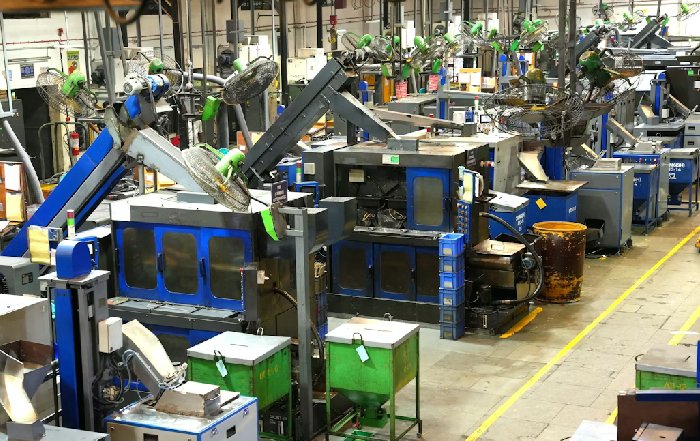
In manufacturing, particularly in Germany, South Korea, Japan, and China, Industry 4.0 has matured into a sophisticated ecosystem of connected factories, digital twins, and predictive maintenance powered by AI. Companies such as Siemens, Bosch, and Hyundai have demonstrated how sensor-rich production lines and machine learning models can minimize downtime, optimize energy consumption, and enable mass customization. Automation has shifted the role of frontline workers away from repetitive assembly tasks toward oversight, exception handling, and collaboration with engineering teams to continuously refine processes. Interested readers can learn more about industrial automation and standards through organizations like the International Organization for Standardization (ISO) and the International Electrotechnical Commission (IEC), which provide frameworks for safety, interoperability, and quality.
Professional services, including law, consulting, marketing, and accounting, are undergoing equally profound changes. Generative AI tools can now draft legal clauses, prepare marketing copy, generate financial summaries, and synthesize large volumes of regulatory or market data. Rather than eliminating these professions, the technology is forcing firms to rethink value propositions and career paths. Junior professionals who once spent much of their time on routine analysis or document preparation are increasingly expected to develop higher-order skills in problem framing, client communication, and strategic judgment. For business leaders and marketers following TradeProfession.com, the evolution of AI-enabled services is closely tracked in sections such as business strategy and digital marketing.
Redefining Roles Rather Than Eliminating Work
A central misconception in public discourse has been the assumption that automation and AI will simply erase jobs, leaving large segments of the workforce permanently displaced. The empirical picture in 2026 is more nuanced and, in many industries, more constructive. While certain categories of routine, predictable work-such as basic data entry, standard reporting, and repetitive transactional tasks-have indeed been automated, new roles have emerged around AI oversight, data stewardship, human-machine interface design, and ethical governance.
Organizations that have approached automation as a redesign challenge rather than a headcount reduction exercise have generally seen stronger outcomes in productivity, employee engagement, and innovation. They have invested in mapping workflows at a granular level, identifying which tasks are best suited for automation, augmentation, or continued human ownership. This task-based view of work aligns with research from institutions such as the MIT Sloan School of Management and the Harvard Business School, which emphasize that AI is most effective when it complements human strengths in creativity, empathy, and complex decision-making rather than attempting to replicate them wholesale.
Job descriptions are evolving accordingly. In banking, for example, credit analysts are shifting from manual data gathering and spreadsheet modeling to interpreting AI-generated risk assessments, engaging with clients on scenario planning, and integrating non-traditional data sources such as climate risk or supply chain resilience into their recommendations. In logistics, warehouse supervisors are increasingly responsible for orchestrating fleets of robots, monitoring real-time dashboards, and intervening when anomalies occur. In marketing, professionals are moving from content production at scale to brand storytelling, strategic positioning, and experimentation with AI-generated variants. Readers can explore how such role redefinitions intersect with broader employment trends in the TradeProfession.com coverage of jobs and employment and executive leadership.
Executive Responsibility and Strategic Leadership
For executives and board members, the rise of automation and AI is fundamentally a leadership and governance challenge. It demands clear strategic intent, disciplined execution, and a proactive approach to risk management, ethics, and workforce development. Leading organizations in the United States, Europe, and Asia have moved beyond isolated AI pilots and are now building enterprise-wide capabilities in data infrastructure, model management, and responsible AI frameworks.
Boards are increasingly establishing dedicated technology and AI committees, often advised by experts from academia, industry, and civil society. These committees oversee issues such as algorithmic bias, data privacy, cybersecurity, and compliance with emerging regulations, including the EU Artificial Intelligence Act and sector-specific guidance from regulators like the U.S. Securities and Exchange Commission and the Bank of England. Executives are expected to understand not only the technical potential of AI but also its implications for brand trust, regulatory exposure, and long-term competitiveness. For readers of TradeProfession.com, these themes connect directly to the platform's focus on executive strategy and global business governance.
A key dimension of executive responsibility is transparency. Stakeholders-employees, customers, investors, and regulators-are demanding clear explanations of how AI systems are used, what data they rely on, and how decisions that affect people's lives and livelihoods are made. Organizations that communicate openly about their AI strategies, engage with worker representatives, and invest in participatory design processes are better positioned to build trust and avoid reputational damage. Resources from bodies like the OECD AI Policy Observatory and the UNESCO guidelines on AI ethics provide valuable reference points for leaders seeking to operationalize responsible AI principles in day-to-day decision-making.
Skills, Education, and Lifelong Learning
The redefinition of jobs is inseparable from the redefinition of skills. Across advanced and emerging economies, the half-life of technical skills is shrinking, and the premium on adaptability, critical thinking, and digital fluency is rising. Educational institutions, training providers, and employers are being forced to rethink how they collaborate to equip people for careers that will span multiple technological waves.
Universities and vocational institutions in countries such as Germany, Singapore, Canada, and the Netherlands are experimenting with modular, stackable credentials that allow learners to acquire targeted competencies in AI, data analytics, cybersecurity, and automation while working. Leading platforms and open education initiatives are making high-quality content accessible globally, enabling professionals in South Africa, Brazil, India, and Southeast Asia to participate in the AI-driven economy. Readers can learn more about evolving education models and workforce training in the dedicated education section of TradeProfession.com, which regularly highlights best practices and emerging partnerships between industry and academia.
Employers are recognizing that hiring for potential and investing in continuous learning can be more effective than competing for a limited pool of experienced AI specialists. Internal academies, rotational programs, and cross-functional project assignments are becoming common tools for building AI literacy across the organization. Even non-technical roles are increasingly expected to understand the basics of data interpretation, algorithmic decision-making, and human-machine collaboration. Reports from organizations such as the World Bank and the International Labour Organization (ILO) underscore that countries which prioritize inclusive skills development and active labor market policies are more likely to translate AI-driven productivity gains into broad-based prosperity rather than polarization.
Regional Dynamics and Global Inequalities
While automation and AI are global phenomena, their impacts are uneven across regions, sectors, and demographic groups. Advanced economies with strong digital infrastructure, robust education systems, and deep capital markets-such as the United States, Germany, the United Kingdom, Canada, Australia, and the Nordic countries-have generally been early adopters, leveraging AI to enhance productivity and develop new business models. At the same time, these countries face significant challenges related to regional disparities, with certain communities and industries more exposed to job displacement than others.
In emerging markets across Asia, Africa, and South America, the picture is more mixed. On one hand, AI and automation offer opportunities to leapfrog legacy systems, improve public service delivery, and build globally competitive digital industries. On the other, there is a risk that rapid automation in advanced economies could reduce demand for low-cost labor in manufacturing and business process outsourcing, undermining traditional development pathways. Institutions like the African Development Bank, the Asian Development Bank, and the Inter-American Development Bank are increasingly focused on how digital transformation, including AI, can support inclusive growth, infrastructure modernization, and job creation in their respective regions.
For the global readership of TradeProfession.com, understanding these regional dynamics is critical for investment decisions, expansion strategies, and risk assessment. The platform's coverage of global markets and economy and international business trends provides ongoing analysis of how AI-driven shifts in productivity, trade patterns, and capital flows are reshaping opportunities in Europe, Asia, North America, and beyond. Investors and founders must evaluate not only technological readiness but also regulatory environments, talent pools, and social stability when allocating capital in an AI-transformed world.
The Intersection of AI, Crypto, and Financial Innovation
One of the most dynamic frontiers in 2026 lies at the intersection of AI, cryptoassets, and digital finance. While the volatility and regulatory scrutiny surrounding cryptocurrencies have persisted, the underlying technologies-blockchains, smart contracts, and tokenization-are increasingly being integrated into mainstream financial and business processes. AI is playing a crucial role in this evolution by enhancing risk management, fraud detection, market surveillance, and automated compliance for both traditional financial institutions and digital-native firms.
Central banks in the United States, the Eurozone, China, and several emerging markets continue to explore or pilot central bank digital currencies (CBDCs), with AI systems supporting transaction monitoring, anti-money laundering efforts, and macroeconomic analysis. Asset managers and hedge funds are deploying AI models to analyze on-chain data, social sentiment, and macro indicators to inform trading strategies in both crypto and traditional markets. For professionals following these developments, TradeProfession.com maintains in-depth coverage in its crypto and digital assets section and investment insights, connecting technological innovation with regulatory developments and market structure.
Institutions such as the Bank for International Settlements (BIS) and the International Monetary Fund (IMF) are providing analytical frameworks for understanding the systemic implications of AI-enhanced digital finance, including cross-border payment efficiency, financial inclusion, and new forms of systemic risk. As AI automates more aspects of trading, lending, and asset management, questions around transparency, fairness, and market integrity are becoming central to regulators and market participants alike.
Building Trust: Governance, Ethics, and Regulation
Experience, expertise, authoritativeness, and trustworthiness are not abstract ideals in the context of automation and AI; they are operational necessities. Organizations that deploy AI without robust governance risk not only regulatory penalties but also loss of customer confidence, employee resistance, and long-term brand damage. In response, a growing ecosystem of standards, certifications, and best practices has emerged, supported by international bodies, industry consortia, and leading research institutions.
The European Union has taken a particularly proactive approach with its AI regulatory framework, which classifies AI systems by risk level and imposes obligations related to transparency, human oversight, and data quality. Similar efforts are underway in the United States, the United Kingdom, Canada, and several Asia-Pacific countries, often drawing on guidance from organizations such as the National Institute of Standards and Technology (NIST), which has developed an AI Risk Management Framework, and the IEEE, which has published ethical guidelines for autonomous and intelligent systems. These frameworks provide practical tools for companies seeking to embed responsible AI principles into product design, procurement, and governance.
For decision-makers and professionals in the TradeProfession.com community, understanding these regulatory trends is essential for strategic planning, product development, and cross-border operations. The platform's technology coverage and news analysis regularly examine how evolving standards and legal requirements affect sectors such as healthcare, finance, manufacturing, and education. By staying informed and engaging with multi-stakeholder initiatives, organizations can position themselves not only as adopters of AI but as credible stewards of its societal impact.
Personal Careers and the Human Dimension of Work
Beyond corporate strategy and macroeconomic trends, the redefinition of jobs is deeply personal. Professionals at every stage of their careers-from recent graduates in London, Berlin, Toronto, and Sydney to mid-career specialists in Singapore, São Paulo, Johannesburg, and Mumbai-are confronting new expectations around adaptability, digital literacy, and lifelong learning. Many are re-evaluating their career paths, seeking roles that offer a balance of stability, growth potential, and alignment with their values in an AI-augmented world.
For individuals, building a resilient career in 2026 involves cultivating a portfolio of skills that combine domain expertise, technological fluency, and human-centric capabilities such as communication, collaboration, and ethical judgment. It also means being proactive in seeking opportunities for reskilling and upskilling, whether through employer-sponsored programs, online learning platforms, or professional networks. The personal development and career guidance resources at TradeProfession.com, particularly in its personal growth and employment insights sections, are tailored to help readers navigate these transitions with clear, actionable perspectives.
Mental health and well-being have also become central considerations as the pace of change accelerates. The pressure to constantly adapt, master new tools, and remain competitive can lead to stress and burnout if not managed thoughtfully. Employers that invest in supportive cultures, transparent communication, and realistic expectations around AI adoption often find that their people are more willing to embrace new technologies and contribute to innovation. Insights from organizations like the World Health Organization (WHO) and leading workplace research institutes underscore the importance of psychological safety and inclusive design in technology-driven workplaces.
Looking Ahead: A Strategic Agenda for 2026 and Beyond
As automation and AI continue to redefine jobs, the choices made by executives, policymakers, educators, and individual professionals in 2026 will shape the trajectory of work for the next decade and beyond. The most successful organizations will be those that treat AI not as a short-term cost lever but as a catalyst for strategic renewal, workforce empowerment, and sustainable growth. They will invest in robust data foundations, cross-functional collaboration, and continuous learning, while maintaining a clear commitment to ethical principles and stakeholder trust.
For the global community of TradeProfession.com, this moment represents both a challenge and an opportunity. Founders can design AI-native businesses that embed responsible practices from the outset. Executives can lead transformations that prioritize human-machine complementarity rather than zero-sum substitution. Investors can allocate capital toward ventures and initiatives that align technological innovation with social and environmental value, consistent with emerging frameworks in sustainable finance. Policymakers can craft regulatory environments that encourage experimentation while protecting citizens' rights and livelihoods.
Ultimately, automation and AI do not predetermine the future of work; they expand the range of possible futures. The task for leaders and professionals is to bring experience, expertise, authoritativeness, and trustworthiness to bear in choosing among them. By engaging thoughtfully with the insights, analyses, and practical guidance available across TradeProfession.com-from artificial intelligence and business strategy to sustainable transformation-readers can position themselves and their organizations not merely to adapt to the redefinition of jobs, but to shape it in ways that foster resilience, equity, and shared prosperity across regions and sectors.
