
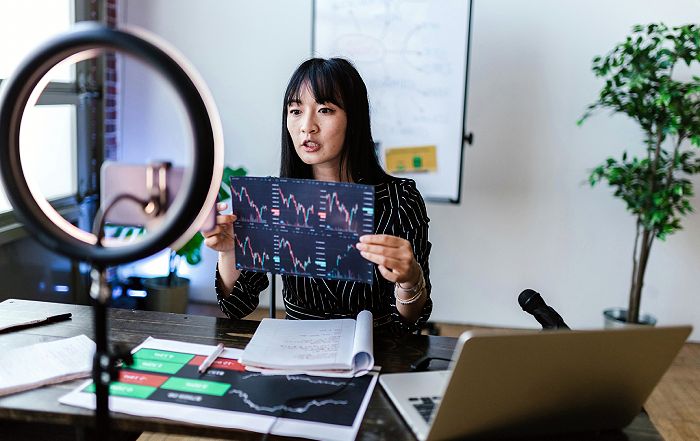
From Speculation to Profession: Building a Sustainable Trading Career in 2026
Trading continues to capture global imagination in 2026, from New York and London to Singapore, Frankfurt, and Sydney, often portrayed as a world of flashing screens, instant decisions, and overnight fortunes. Yet the reality for those who manage to turn trading into a reliable, long-term profession is far less glamorous and far more structured than popular culture suggests. On TradeProfession.com, the most successful readers and contributors consistently demonstrate that sustainable trading careers are grounded in rigorous routines, disciplined risk management, continuous education, and a professional mindset that treats trading as a business rather than a pastime. As financial markets become increasingly interconnected and shaped by artificial intelligence, digital assets, and evolving regulatory regimes, the distinction between speculative gambling and professional trading has never been clearer-or more critical.
In 2026, traders operate in an environment defined by rapid information flows, algorithmic execution, and a global macro landscape that can shift in hours due to geopolitical events, monetary policy decisions, or technological disruptions. This means that retail traders in United States, United Kingdom, Germany, Canada, Australia, or Singapore are exposed to similar information and volatility as institutional desks, but without the inherent support structures that large organizations provide. The mission of TradeProfession.com is to help bridge that gap by bringing executive-level thinking, global economic insight, and technology awareness into the daily practices of individual traders, so that trading becomes a viable career path rather than a short-lived experiment.
Establishing Professional Foundations: Structure Over Impulse
The defining characteristic of a professional trading career is structure. Unlike traditional employment, where supervisors, corporate policies, and fixed working hours impose external discipline, trading offers near-total autonomy. Without deliberate frameworks, that autonomy can quickly deteriorate into overtrading, emotional decision-making, and inconsistent results. Seasoned traders who share their experiences with TradeProfession.com repeatedly emphasize that the transition from amateur to professional begins when they design and adhere to a clearly defined daily and weekly routine that integrates research, preparation, execution, review, and rest.
Pre-market preparation is a cornerstone of this structure. Traders who treat their craft professionally begin each day by reviewing overnight developments in Asia, Europe, and North America through platforms such as Bloomberg and Reuters, cross-referencing macroeconomic data and corporate news to form a coherent narrative for the trading day. This process is not about reacting to every headline but about filtering information into a focused watchlist and a set of scenarios that can be translated into specific, pre-planned trades. In this way, the trading day becomes an exercise in executing a plan rather than improvising under pressure.
The same structured approach extends to weekly and monthly planning. Professional traders block time for strategic review, portfolio rebalancing, and scenario analysis based on global economic outlooks from institutions such as the World Bank or the International Monetary Fund. Readers who regularly consult the economy insights on TradeProfession.com are familiar with how macroeconomic cycles, central bank policies, and fiscal developments influence asset classes differently, and they use that understanding to align their trading plans with the prevailing environment rather than fighting it.
Lifelong Learning: Expertise as a Competitive Edge
In a world where algorithms and institutions operate at machine speed, human traders sustain their careers by cultivating depth of knowledge and adaptability. Financial markets in 2026 are shaped by a complex interplay of macroeconomics, sector-specific innovation, regulatory change, and behavioral dynamics. Traders who view education as a one-time hurdle rather than a continuous process are quickly outpaced by those who systematically upgrade their skills.
Long-term career traders increasingly rely on trusted global sources such as the Bank for International Settlements for insights into monetary and financial stability, and the OECD for structural economic trends across Europe, Asia, and the Americas. At the same time, they complement these macro perspectives with targeted technical and analytical education, often through curated courses and industry certifications. The education hub on TradeProfession.com has become a reference point for professionals who want to deepen their understanding of topics such as algorithmic trading, market microstructure, sustainable investing, and behavioral finance, with a particular focus on helping traders translate theory into actionable routines.
Expertise in 2026 also increasingly includes technological literacy. Traders who understand how machine learning models process data, how blockchain transactions are verified, or how order routing works in fragmented markets are better positioned to evaluate both opportunities and risks. By engaging with resources like MIT Technology Review and complementing that knowledge with the technology coverage on TradeProfession.com, traders move beyond superficial narratives and develop informed views on the tools and platforms they rely on, which is essential for maintaining an edge in a highly competitive environment.
Risk Management as the Core of Professional Practice
While popular narratives focus on profits, experienced traders and institutional risk managers agree that the foundation of a sustainable trading career is capital preservation. The difference between a short-lived trading experiment and a decades-long profession often comes down to whether risk is treated as an afterthought or as an organizing principle. Career traders internalize the idea that survival through multiple market cycles matters more than any single winning streak, and they design their routines around strict risk parameters.
This risk-first mindset manifests in clearly defined rules for position sizing, stop-loss levels, maximum daily and weekly drawdowns, and exposure limits across sectors and asset classes. Rather than measuring success solely by returns, professionals also track metrics such as volatility of equity, maximum drawdown, and risk-adjusted performance. Frameworks taught by organizations like the CFA Institute support this approach, emphasizing that consistent application of risk controls allows traders to remain active through market shocks and to compound returns over time. Readers who engage frequently with the investment section of TradeProfession.com recognize that many of the principles used by institutional portfolio managers-such as diversification, scenario analysis, and stress testing-are equally applicable to individual trading accounts.
The rise of artificial intelligence has further transformed risk management into a daily operational discipline. AI-enhanced platforms and brokers integrate real-time analytics, correlation tracking, and scenario modeling, enabling traders to see their aggregate risk exposure across positions and markets. Solutions from providers highlighted by Refinitiv and similar firms give traders institutional-grade tools for measuring and managing risk. By combining these technologies with the conceptual understanding available in the artificial intelligence coverage on TradeProfession.com, traders can systematically reduce reliance on intuition and instead base risk decisions on data and models, without relinquishing human judgment.
Psychological Resilience: The Human Factor Behind Longevity
Even with robust knowledge and sophisticated tools, trading remains an emotionally demanding profession. Unlike many corporate roles where income is relatively stable, traders experience direct financial consequences from their decisions on a daily basis. Drawdowns, missed opportunities, and unexpected market reversals can trigger stress responses that erode discipline and lead to impulsive behavior. Long-term professionals recognize that mastering their own psychology is as important as mastering any technical indicator.
Insights from performance psychology and leadership research, as discussed in publications such as Harvard Business Review, have become increasingly influential among traders. Techniques such as mindfulness, structured reflection, and cognitive reframing are integrated into trading routines to create mental distance between outcomes and identity. Many career traders maintain detailed journals not only of trades but of their emotional states, decision rationales, and reactions to wins and losses. This practice allows them to identify recurring psychological patterns-such as revenge trading after a loss or overconfidence after a win-and to design countermeasures.
The lifestyle dimension is equally important. Sustained performance requires adequate sleep, physical activity, and boundaries between work and personal life. Traders who share their experiences with TradeProfession.com frequently highlight that their turning point came when they began to prioritize health and recovery with the same seriousness as they approached chart analysis. The personal development content on TradeProfession.com reinforces this holistic view, demonstrating that mental and physical resilience are not optional extras but structural components of a professional trading career.
Treating Trading as a Business: Governance, Compliance, and Strategy
A crucial shift for aspiring professionals is to stop viewing trading as a sequence of isolated bets and start managing it as a business. This mindset reframes capital as working inventory, trading strategies as products, and the trader as both executive and risk officer. On TradeProfession.com, this business-centric perspective is a recurring theme across the business and executive sections, where parallels are drawn between corporate governance and trading governance.
From a practical standpoint, treating trading as a business entails maintaining detailed records of all trades, including entry and exit rationales, risk parameters, and post-trade evaluations. It also involves producing regular "management reports" for oneself, such as weekly and monthly performance summaries, risk dashboards, and strategy assessments. This self-governance structure mirrors how boards and executive committees oversee corporate performance, and it creates accountability that is otherwise absent in solo trading.
Regulatory compliance and taxation form another pillar of professionalization. Traders operating in United States, United Kingdom, European Union, Canada, Australia, Singapore, and other major jurisdictions must navigate rules set by authorities such as the U.S. Securities and Exchange Commission, the European Securities and Markets Authority, and local regulators including the Monetary Authority of Singapore or the Financial Conduct Authority in the UK. Ignorance of reporting requirements, leverage restrictions, or market abuse regulations can result in penalties that not only damage finances but also reputations. By staying informed through both official regulator websites and the regulatory analysis regularly discussed on TradeProfession.com, traders embed legal and ethical considerations into their operating model, which is indispensable for long-term legitimacy.
Diversification, Market Cycles, and Global Awareness
Sustainable trading careers are rarely built on a single instrument or niche. The last decade has demonstrated how concentrated exposure-whether to a particular stock, sector, or asset class-can lead to severe drawdowns when conditions change. Professional traders therefore design strategies that acknowledge market cycles and diversify intelligently across instruments and regions.
Understanding market cycles begins with macroeconomic awareness. Institutions such as the Federal Reserve, the European Central Bank, and national central banks in Japan, United Kingdom, Canada, and Australia shape liquidity conditions, interest rates, and risk appetite globally. Traders who follow these institutions closely, alongside economic outlooks from the OECD, can adapt their strategies to environments such as tightening cycles, inflationary regimes, or periods of quantitative easing. Content from the global section of TradeProfession.com regularly highlights how such macro shifts cascade through equities, bonds, commodities, foreign exchange, and cryptocurrencies.
Diversification across asset classes further enhances resilience. Analytical resources like Morningstar and Nasdaq help traders evaluate cross-asset performance, sector rotations, and thematic trends such as renewable energy, artificial intelligence, or healthcare innovation. Traders who complement equity trading with bond strategies, commodity exposure, or currency pairs can smooth their equity curves and reduce dependence on a single market regime. For many TradeProfession.com readers, this cross-asset approach is now standard practice, particularly as they explore the stock exchange and investment resources to refine multi-asset strategies.
Technology, Crypto, and the New Market Infrastructure
Technology has moved from being an optional advantage to the backbone of modern trading. In 2026, traders who ignore advances in AI, automation, and blockchain infrastructure risk operating with structural disadvantages compared to their peers. At the same time, those who adopt technology blindly without understanding its limitations expose themselves to new forms of risk. The objective for professionals is therefore to integrate technology as a disciplined enabler rather than a substitute for judgment.
Artificial intelligence and machine learning tools now assist with everything from pattern recognition and sentiment analysis to order execution and portfolio optimization. Coverage in MIT Sloan Management Review and similar outlets shows how financial institutions and hedge funds deploy AI systems to process unstructured data such as news, social media, and alternative datasets. Individual traders, through smart use of platforms and APIs, can access scaled-down versions of these capabilities. The artificial intelligence section on TradeProfession.com focuses specifically on translating these institutional practices into accessible frameworks for independent professionals, emphasizing governance, model risk, and interpretability.
In parallel, blockchain and digital assets have matured from speculative curiosities into integral components of global capital markets. Cryptocurrencies, stablecoins, and tokenized securities trade around the clock, with liquidity hubs in United States, Europe, and Asia, and with regulatory frameworks gradually solidifying in jurisdictions such as Singapore, Switzerland, and United Arab Emirates. Platforms like CoinDesk and analytics firms such as Chainalysis provide continuous insight into market structure, regulatory developments, and on-chain activity. Traders who build sustainable careers in this space do so by treating crypto markets with the same rigor as traditional markets, applying robust risk management, compliance awareness, and technological understanding. The crypto hub on TradeProfession.com supports this professionalization by focusing on the intersection of digital assets, regulation, and institutional adoption.
Sustainability, ESG, and Long-Horizon Thinking
A defining shift in global finance over the last several years has been the mainstreaming of sustainability and Environmental, Social, and Governance (ESG) considerations. For traders who aim to remain relevant into the 2030s and beyond, understanding how capital is being reallocated toward sustainable assets is no longer optional. Major institutions such as MSCI and the UN Principles for Responsible Investment have developed robust frameworks for evaluating ESG performance, influencing capital flows into companies and sectors that meet specific criteria.
From a trading perspective, this translates into new opportunities and new risk factors. Energy transition policies, carbon pricing mechanisms, and climate-related regulations affect valuations across industries, from utilities and automotive to mining and technology. The International Energy Agency provides detailed projections on energy markets, while initiatives like the UNEP Finance Initiative explore how financial institutions incorporate sustainability into their strategies. Traders who integrate this information into their analysis can anticipate structural shifts rather than reacting to them belatedly. The sustainable business content on TradeProfession.com helps readers connect global sustainability agendas with concrete trading themes, ensuring that their strategies are aligned with long-term capital trends rather than short-term speculation.
Community, Networks, and Professional Identity
Despite the solitary image often associated with screens and charts, trading as a sustainable career is rarely built in isolation. Professional identity is reinforced and refined through interaction with peers, mentors, and cross-disciplinary experts. Traders who participate in structured communities, industry associations, and educational networks benefit from shared experience, constructive feedback, and exposure to diverse perspectives.
Organizations such as the CME Group and the CFA Institute offer not only educational resources but also communities of practice that span continents, from North America and Europe to Asia-Pacific and Africa. Digital platforms like Investopedia and professional networks on LinkedIn provide additional venues for discussion and knowledge sharing. Within TradeProfession.com, the founders section showcases individuals who have successfully built careers at the intersection of trading, entrepreneurship, and leadership, underscoring that sustainable success often involves evolving from a purely individual trader into a broader professional role.
Cross-industry networking also plays an increasingly important role. Understanding developments in global trade, supply chains, and technology adoption helps traders anticipate market-moving trends before they are fully priced. Institutions like the World Trade Organization and the trade-focused divisions of the OECD provide insight into policy shifts and trade dynamics that directly affect corporate earnings and currency valuations. The innovation coverage on TradeProfession.com encourages traders to think beyond charts and indicators, cultivating an interdisciplinary mindset that is essential for navigating complex, interconnected markets.
From Aspiration to Execution: Turning Trading into a Career
By 2026, it is clear that sustainable trading careers do not emerge from isolated bursts of performance or a few fortunate trades. They are the result of deliberate design and consistent execution across multiple dimensions: structured routines, continuous education, disciplined risk management, psychological resilience, technological integration, regulatory compliance, global awareness, and community engagement. For the audience of TradeProfession.com, which spans United States, United Kingdom, Germany, Canada, Australia, Singapore, Japan, South Africa, Brazil, and beyond, the unifying theme is that trading must be approached with the same seriousness and professionalism as any executive role or entrepreneurial venture.
Those who succeed over decades tend to view themselves not merely as traders but as stewards of capital, operators of a specialized business, and participants in a broader financial ecosystem that increasingly values transparency, sustainability, and technological sophistication. They use resources such as the business, economy, global, and technology sections of TradeProfession.com as part of an integrated knowledge base that supports their decision-making.
For professionals and aspiring traders alike, the path forward is demanding yet clearly defined. It requires moving beyond the adrenaline-driven myths of trading and embracing a disciplined, evidence-based, and ethically grounded approach. In doing so, individuals can transform trading from a high-risk gamble into a durable career-one that not only survives the inevitable cycles of global markets but also evolves with them, delivering both financial rewards and professional fulfillment over the long term.
