
Climate Risk and Real Estate Investment: How TradeProfession Readers Can Navigate a Warming World
Climate Risk Becomes a Core Real Estate Variable
By 2026, climate risk has moved from the margins of specialist reports into the center of real estate investment decisions across global markets. Institutional investors, family offices, listed real estate investment trusts, and private equity sponsors now recognize that physical climate hazards and the transition to a low-carbon economy are reshaping asset values, financing conditions, insurance availability, and regulatory obligations in ways that are too material to ignore. For the readership of TradeProfession.com, whose interests span artificial intelligence, banking, business, crypto, the broader economy, education, employment, executive leadership, founders, global markets, innovation, investment, jobs, marketing, news, personal finance, stock exchanges, sustainability, and technology, climate risk in real estate is emerging as a unifying theme that connects all these domains.
Climate science has become more granular and commercially relevant. Organizations such as the Intergovernmental Panel on Climate Change (IPCC) provide increasingly detailed assessments of physical climate hazards, while bodies like the Network for Greening the Financial System (NGFS) develop climate scenarios used by central banks and supervisors. Investors who once treated these documents as academic background are now integrating them into asset-level underwriting models, portfolio construction, and strategic asset allocation. Learn more about how central banks are integrating climate considerations into financial stability analysis on the Bank for International Settlements website.
For real estate, the implications are profound. Buildings are long-lived assets with fixed locations, and their value depends on local environmental conditions, infrastructure resilience, regulatory frameworks, and the behavior of tenants and capital providers over decades. As a result, climate risk is no longer an abstract environmental concern; it is a direct driver of cash flows, capital expenditure, and exit valuations. On TradeProfession.com, this shift is reflected in growing interest in sustainable business and investment themes, as professionals across sectors seek to understand how climate risk will affect their portfolios, careers, and strategic choices.
Physical Climate Risk: Floods, Heat, Storms, and Sea-Level Rise
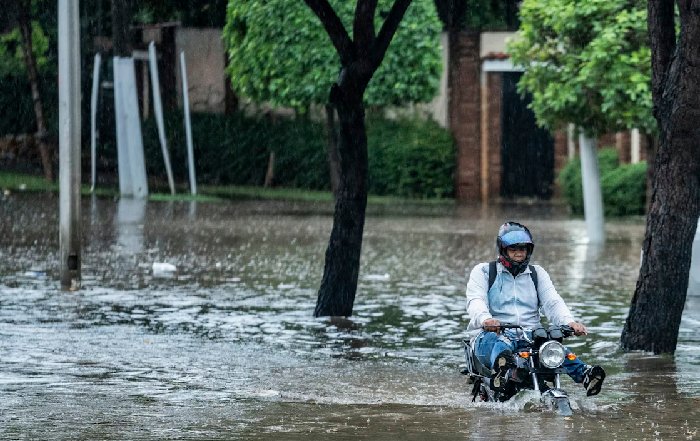
Physical climate risk refers to the direct impacts of climate change on assets and operations, including acute events such as storms and floods and chronic changes such as rising temperatures and sea levels. In real estate markets across the United States, the United Kingdom, Germany, Canada, Australia, France, Italy, Spain, the Netherlands, Switzerland, China, Sweden, Norway, Singapore, Denmark, South Korea, Japan, Thailand, Finland, South Africa, Brazil, Malaysia, and New Zealand, investors are re-evaluating location strategies and risk premiums in light of increasingly detailed hazard maps and loss projections. The World Meteorological Organization offers regularly updated insights into the frequency and severity of climate-related disasters; readers can review recent trends and projections on the WMO climate page.
In coastal cities such as Miami, New York, London, Amsterdam, Singapore, and Sydney, sea-level rise and storm surge risk are placing pressure on waterfront residential and commercial assets, as well as on supporting infrastructure. Inland, riverine flooding is affecting logistics hubs, industrial parks, and suburban housing developments from Germany's Rhine corridor to China's Yangtze basin, while extreme heat is altering the economics of office, retail, and data center operations across southern Europe, the southern United States, and parts of Asia and Africa. The U.S. National Oceanic and Atmospheric Administration (NOAA) provides sea-level rise projections and flood risk tools that have become standard references for North American investors; further details are available on the NOAA climate site.
For the global audience of TradeProfession.com, which closely follows economic developments and cross-border investment flows, the key insight is that physical climate risk is not evenly distributed. Certain cities and regions are likely to face more frequent and severe disruptions, while others may benefit from relative climate resilience. This geographic differentiation is beginning to influence cap rates, insurance costs, and lender requirements, leading to subtle but growing divergences in pricing between assets that may appear similar on traditional financial metrics but differ significantly in climate exposure.
Transition Risk: Policy, Technology, and Market Shifts
Alongside physical risk, transition risk has become a central concern for real estate investors. Transition risk encompasses the financial impacts arising from policy, legal, technological, and market changes associated with the shift toward a low-carbon economy. As governments set more ambitious decarbonization targets and introduce stricter building performance standards, owners of carbon-intensive or energy-inefficient buildings face rising compliance costs, potential obsolescence, and reduced tenant demand. The International Energy Agency (IEA) has highlighted that buildings account for a substantial share of global energy consumption and emissions; investors can explore detailed sectoral analysis on the IEA buildings sector page.
In the European Union, regulations such as the EU Taxonomy and the Energy Performance of Buildings Directive are pushing owners to upgrade building envelopes, heating and cooling systems, and on-site renewable energy generation. In the United States, local laws like New York City's Local Law 97 impose emissions caps on large buildings, with escalating penalties for non-compliance. Similar frameworks are emerging in the United Kingdom, Canada, Australia, and parts of Asia, with Singapore, Japan, and South Korea among the early adopters of building performance standards and disclosure requirements. The European Commission offers comprehensive information on sustainable finance regulations and building energy directives; readers can examine the evolving policy landscape on the EU climate action pages.
For professionals tracking global business and regulatory trends through TradeProfession.com, transition risk is particularly relevant because it intersects with corporate strategy, capital allocation, and executive accountability. Boards and senior executives are increasingly expected to understand and manage their organizations' exposure to climate-related policy shifts, while investors are scrutinizing whether real estate portfolios are aligned with national and corporate net-zero commitments. This dynamic is reshaping conversations in investment committees, credit committees, and boardrooms from New York and London to Frankfurt, Toronto, Singapore, and Johannesburg.
Financial Markets, Banking, and Insurance Responses
Banking and insurance institutions are now treating climate risk in real estate as a core financial stability and profitability issue. Banks operating in major jurisdictions are being guided by prudential regulators and central banks to integrate climate risk into credit risk models, collateral valuations, and portfolio stress tests. The European Central Bank (ECB), the Bank of England, and the U.S. Federal Reserve have all undertaken climate scenario exercises that consider how severe weather events and decarbonization policies could affect the value of mortgage books and commercial real estate exposures. Investors and risk managers can review climate-related supervisory expectations on the ECB banking supervision climate page.
Insurance markets are also undergoing a significant transition. In parts of the United States, Australia, and other high-risk regions, insurers have raised premiums sharply or withdrawn coverage for properties exposed to wildfire, flood, or storm surge. Reinsurance capacity constraints are feeding through into primary insurance pricing, and some properties are becoming effectively uninsurable at commercially viable rates. The Insurance Information Institute and the Geneva Association provide research on how climate risk is influencing insurance availability and pricing; more can be found on the Geneva Association climate risk pages.
The readers of TradeProfession.com, many of whom are engaged in banking, investment, and stock exchange-listed vehicles, are seeing the consequences of these shifts in lending terms, covenant structures, and capital market valuations. Lenders are beginning to differentiate interest margins and loan-to-value ratios based on property-level climate risk assessments, while bond investors are scrutinizing green building certifications and emissions reduction pathways for listed property companies. In parallel, the growth of green bonds, sustainability-linked loans, and transition finance instruments is creating new funding avenues for owners who commit to upgrading and decarbonizing their assets.
Data, Technology, and AI in Climate-Smart Real Estate
The complexity of climate risk assessment has driven rapid innovation in data, analytics, and technology. Specialized climate analytics firms now offer asset-level risk scores that incorporate multiple hazards, time horizons, and climate scenarios, often using high-resolution geospatial data and advanced modeling techniques. At the same time, property technology (proptech) solutions are enabling real-time monitoring of energy consumption, indoor environmental quality, and building system performance, which is essential for both risk management and decarbonization strategies. The World Economic Forum has published extensive analysis on how digital technologies and data can accelerate climate resilience in cities and infrastructure; interested readers can explore these insights on the WEF climate and nature hub.
Artificial intelligence and machine learning are playing a particularly important role in translating complex climate datasets into actionable insights for investors, lenders, and asset managers. AI-driven models can integrate historical loss data, satellite imagery, climate projections, and building characteristics to estimate future damage probabilities, downtime, and insurance costs for individual properties. They can also optimize building operations to reduce energy use and emissions while maintaining or enhancing tenant comfort and productivity. For the technology-focused audience of TradeProfession.com, the intersection of artificial intelligence and real estate represents a significant opportunity to combine domain expertise with cutting-edge analytics.
Moreover, as data centers, logistics hubs, and life-sciences facilities become core components of institutional real estate portfolios, the technology and sustainability performance of these assets is increasingly scrutinized. Organizations like the U.S. Green Building Council and BREEAM provide frameworks for green building certifications that are now widely recognized by global investors; details on certification criteria and performance metrics are available on the USGBC website. These certifications, while not a substitute for detailed climate risk analysis, can serve as useful indicators of how well a building is positioned to manage energy, water, and indoor environmental quality challenges in a changing climate.
Investor Strategies for Managing Climate Risk
Real estate investors are adopting a range of strategies to manage and capitalize on climate risk, moving beyond simple exclusion of high-risk locations toward more nuanced portfolio construction and active asset management approaches. Many leading institutional investors now require climate risk assessments as part of due diligence for acquisitions, refinancing, and development projects, using both third-party analytics and internal models. These assessments consider not only hazard exposure but also adaptive capacity, including the quality of local infrastructure, municipal resilience plans, and the potential for on-site mitigation measures. The Task Force on Climate-related Financial Disclosures (TCFD) has provided a widely adopted framework for integrating such analysis into governance, strategy, risk management, and metrics; practitioners can review its recommendations on the TCFD website.
Active asset management is becoming central to climate-smart real estate investment. Owners are investing in flood defenses, elevation of critical equipment, improved drainage, enhanced building envelopes, high-efficiency HVAC systems, and on-site renewable energy. These measures can reduce physical damage risk, operating costs, and regulatory penalties while improving tenant retention and rental growth. For readers of TradeProfession.com who are involved in business leadership, executive decision-making, or entrepreneurial founder-led strategies, the key lesson is that climate adaptation and mitigation investments should be framed not only as compliance costs but as value-enhancing initiatives that protect and grow net operating income over time.
Portfolio-level strategies include geographic diversification, rebalancing toward more resilient cities and regions, and proactive engagement with local authorities on climate resilience infrastructure. In some cases, investors are exiting or underweighting markets where climate risk is rising faster than adaptation capacity, while overweighting those that combine strong economic fundamentals with credible resilience plans. The Urban Land Institute and Global Real Estate Sustainability Benchmark (GRESB) publish research on best practices in climate-resilient real estate investment and portfolio management; more information can be found on the GRESB real estate page.
Employment, Skills, and Education in Climate-Aware Real Estate
The integration of climate risk into real estate investment is reshaping employment patterns, skill requirements, and professional education across the sector. Demand is growing for professionals who can combine traditional real estate expertise with knowledge of climate science, environmental engineering, data analytics, and regulatory frameworks. Asset managers, underwriters, valuers, and development managers are increasingly expected to understand how climate scenarios and decarbonization pathways affect their decisions. For those following employment and jobs trends and career opportunities on TradeProfession.com, climate-aware real estate is emerging as a significant source of new roles and reskilling needs.
Universities and professional bodies are responding by incorporating climate risk, sustainability, and resilience into real estate, finance, and urban planning curricula. Executive education programs now frequently include modules on TCFD, net-zero strategies, sustainable finance, and ESG integration in property portfolios. Organizations like the Royal Institution of Chartered Surveyors (RICS) and the Urban Land Institute are updating professional standards and offering specialized training on climate-related topics. For a broader perspective on how education systems are adapting to climate and sustainability challenges, readers can refer to the UNESCO resources on education for sustainable development.
This evolution in skills and education has implications not only for institutional investors and large developers but also for smaller owners, advisors, and service providers across North America, Europe, Asia, Africa, and South America. Those who invest in building climate competence are likely to be better positioned to serve clients, access capital, and navigate regulatory changes. On TradeProfession.com, the convergence of education, technology, and sustainability offers a roadmap for professionals seeking to future-proof their careers in the real estate and financial sectors.
Global, Regional, and Market-Specific Dynamics
While climate risk is a global phenomenon, its manifestations and market responses vary significantly by region and country. In the United States, federal guidance, state-level policies, and local zoning regulations interact with a large and diverse real estate market, leading to a patchwork of climate risk management practices. In Europe, the EU's regulatory framework is driving more uniform disclosure and performance standards, though national implementation still differs between Germany, France, Italy, Spain, the Netherlands, the Nordics, and other member states. In Asia, countries such as China, Japan, South Korea, Singapore, and Thailand are balancing rapid urbanization and economic growth with increasing exposure to typhoons, flooding, and heat stress. The OECD provides comparative analysis of climate change impacts and adaptation policies across member and partner countries; further reading is available on the OECD climate change page.
Emerging markets in Africa, South America, and parts of Asia face particular challenges, as climate vulnerability often coincides with limited fiscal capacity for large-scale adaptation investments and less developed insurance and capital markets. At the same time, these regions offer significant growth potential in logistics, residential, and infrastructure-linked real estate, especially where governments and private investors collaborate on resilient urban development. For investors tracking global economic and investment trends on TradeProfession.com, understanding the interplay between climate risk, governance quality, and infrastructure investment is critical to assessing long-term opportunities and risks.
In advanced economies, climate risk is increasingly reflected in real estate valuations, though the process remains uneven and incomplete. Research by institutions such as Harvard University and the London School of Economics has indicated that properties exposed to high flood or wildfire risk may trade at discounts compared to otherwise similar assets, particularly where hazard information is widely available and insurance costs are rising. While academic studies are still evolving, investors can explore broader climate economics research through the Grantham Research Institute on Climate Change and the Environment. As data availability and investor sophistication improve, it is likely that climate-related repricing will accelerate, creating both risks for unprepared owners and opportunities for those who can identify mispriced resilience.
Integrating Climate Risk into Personal and Institutional Investment Decisions
For the diverse audience of TradeProfession.com, climate risk in real estate is relevant not only to large institutions but also to individual investors, executives managing corporate real estate, and professionals responsible for pension funds, endowments, and family wealth. Personal investment strategies that include direct property holdings, real estate funds, or REITs increasingly need to account for both physical and transition risks, as well as the potential for policy-driven changes in taxation, building codes, and disclosure requirements. Readers interested in aligning their personal financial decisions with long-term climate resilience can benefit from understanding how climate considerations are being embedded in professional investment practice.
Institutional investors are moving toward integrating climate risk into strategic asset allocation, manager selection, and engagement with portfolio companies. Requests for proposals for real estate mandates now routinely ask about climate risk assessment methodologies, net-zero targets, and adaptation strategies. Asset owners are seeking managers who can demonstrate robust governance, credible decarbonization pathways, and transparent reporting on climate metrics. In parallel, some investors are exploring climate-themed real estate strategies focused on resilient infrastructure, green buildings, and urban regeneration projects that enhance social and environmental outcomes alongside financial returns. The PRI (Principles for Responsible Investment) provides guidance for asset owners and managers on integrating climate considerations into investment decision-making; more information is available on the PRI climate change page.
For executives and founders whose companies occupy or develop real estate, climate risk is increasingly a strategic issue that affects business continuity, employee well-being, brand reputation, and access to capital. Corporate tenants are beginning to consider climate resilience and building performance as criteria in location decisions, particularly in sectors such as technology, financial services, life sciences, and advanced manufacturing. This reinforces the business case for owners to invest in resilient, low-carbon buildings that can attract and retain high-quality tenants and support long-term rental growth. On TradeProfession.com, where innovation and marketing are central themes, climate-smart real estate is becoming part of how companies signal their commitment to sustainability and forward-looking risk management.
The Road Ahead: From Risk Recognition to Competitive Advantage
As of 2026, the recognition of climate risk in real estate investment is widespread, but the depth and consistency of responses vary significantly across markets, asset classes, and investor types. Some leading institutions have embedded climate considerations into every stage of the investment lifecycle, from sourcing and due diligence to asset management and exit, while others are still in the early stages of data collection and pilot analyses. Over the coming decade, it is likely that regulatory pressures, investor expectations, technological advances, and the increasing frequency of climate-related disruptions will push the market toward more systematic and sophisticated approaches.
For the global, cross-sector audience of TradeProfession.com, the central message is that climate risk in real estate is not a niche concern confined to sustainability specialists; it is a fundamental driver of value, risk, and opportunity across banking, business, investment, employment, and technology. Professionals who build expertise in this area, leverage high-quality data and analytics, and integrate climate considerations into strategy and operations will be better positioned to navigate uncertainty and capture emerging opportunities. Those who fail to adapt may find that assets once considered safe and stable become sources of unexpected volatility and value erosion.
In this evolving landscape, TradeProfession.com aims to serve as a trusted platform connecting insights across artificial intelligence, banking, business, crypto, the broader economy, education, employment, executive leadership, founders, global trends, innovation, investment, jobs, marketing, news, personal finance, stock exchange dynamics, sustainability, and technology. By exploring how climate risk intersects with each of these domains, the platform helps readers develop the experience, expertise, authoritativeness, and trustworthiness required to make informed decisions in real estate and beyond. As climate change continues to reshape markets and societies worldwide, the ability to understand and manage climate risk in real estate will be a defining capability for investors, executives, and professionals in the years ahead.
