
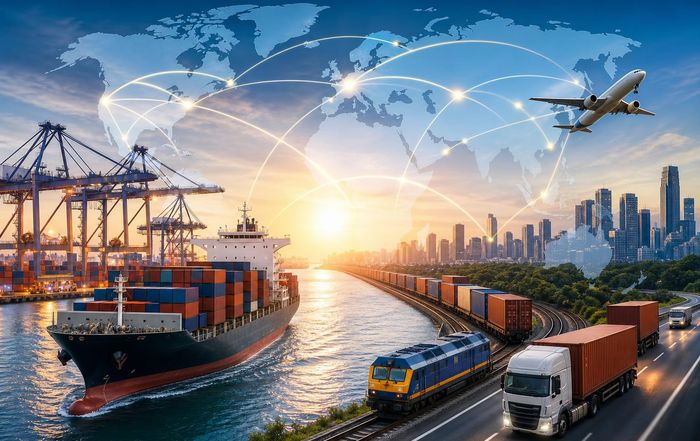
Global Trade Corridors Driving Economic Growth
The New Geography of Global Commerce
Ok so global trade is being reshaped by a network of powerful trade corridors that are redefining how goods, services, capital, and data flow across continents, and for business leaders, investors, and professionals who rely on TradeProfession for new insight, understanding these corridors has become essential to strategic decision-making, risk management, and long-term value creation. While globalization has been under pressure from geopolitical tensions, supply chain disruptions, and regulatory fragmentation, the reality is that trade has not retreated; instead, it has been rerouted, diversified, and technologically augmented, creating a more complex but also more opportunity-rich landscape for companies operating in sectors such as advanced manufacturing, digital services, financial technology, and sustainable infrastructure.
These trade corridors are no longer defined solely by physical shipping lanes or traditional trade agreements; they are multi-layered ecosystems that integrate logistics infrastructure, digital platforms, financial networks, innovation clusters, and regulatory frameworks, meaning that the world's most dynamic trade routes now combine deep-water ports, high-speed rail, satellite-enabled tracking systems, cloud-based customs solutions, and sophisticated cross-border payment rails. As a result, executives and founders who follow developments on TradeProfession.com are increasingly focused on the intersection of trade, technology, banking, investment, and employment, recognizing that trade corridors have become strategic assets that determine where value is created, how quickly it can be captured, and which regions will lead the next phase of global growth.
Strategic Trade Corridors in a Fragmented World
The most influential trade corridors in 2026 can be grouped into several macro-routes that together account for a large share of global trade volumes and investment flows, and each of these corridors carries distinct implications for supply chain strategy, market entry, and risk diversification. The long-standing Transatlantic corridor between North America and Europe remains a core pillar of global commerce, supported by deep capital markets, sophisticated regulatory systems, and strong innovation ecosystems in cities such as New York, London, Frankfurt, and Amsterdam, and businesses seeking to understand how to navigate this environment are turning to resources on business strategy and global markets to align their expansion and partnership decisions with evolving regulatory and technological realities.
At the same time, the Transpacific corridor connecting the United States, Canada, China, Japan, South Korea, and the broader Asia-Pacific region continues to drive global manufacturing and technology trade, even as organizations diversify away from single-country dependencies by building "China-plus-one" or even "China-plus-many" strategies that include Vietnam, Thailand, Malaysia, and India. The rise of South-South trade, especially between Asia, Africa, and South America, is equally significant, with new corridors linking manufacturing hubs in Asia to resource-rich economies in Brazil, South Africa, and other African nations, and these shifts are increasingly aligned with sustainable development priorities, as companies seek to comply with evolving environmental and social standards while maintaining competitiveness in global value chains.
For decision-makers, these corridors are not abstract constructs but practical realities that shape port congestion, freight rates, customs timelines, and access to skilled labor, and many organizations now rely on real-time trade data from institutions such as the World Trade Organization and macroeconomic insights from the International Monetary Fund to calibrate their operations. As TradeProfession.com has emphasized in its coverage of global economic trends, the companies that thrive in this environment are those that treat trade corridors as dynamic systems requiring continuous monitoring, scenario planning, and cross-functional coordination across finance, operations, technology, and compliance.
Infrastructure as the Backbone of Trade Corridors
Physical infrastructure remains the backbone of global trade corridors, even as digital technologies increasingly orchestrate and optimize the movement of goods and services, and the scale of infrastructure investment underway in 2026 is unprecedented in both developed and emerging markets. Major port expansions in Rotterdam, Singapore, Los Angeles, and Shanghai, combined with new deep-water port developments in Africa and South Asia, are enabling larger vessels, faster turnaround times, and more resilient routing options, while extensive rail and road projects are improving hinterland connectivity and reducing logistics bottlenecks that previously constrained trade-driven growth.
Initiatives such as China's Belt and Road Initiative, various European connectivity strategies, and regional infrastructure programs across Africa and Latin America have mobilized hundreds of billions of dollars in public and private capital, supported by institutions such as the World Bank and regional development banks. At the same time, infrastructure investment is increasingly shaped by sustainability requirements, with export credit agencies and multilateral lenders integrating climate risk assessments, emissions reduction targets, and social safeguards into project financing frameworks, and executives seeking to learn more about sustainable business practices are turning to specialized analysis from organizations such as the OECD and to dedicated sustainability insights on TradeProfession.com's sustainable business section to align their capital allocation and risk management strategies with evolving expectations.
For corporate leaders in manufacturing, logistics, and retail, this infrastructure build-out is not merely a backdrop but a critical determinant of cost structures, delivery reliability, and market access, and many are engaging more deeply with infrastructure planning authorities, port operators, and logistics service providers to co-design solutions such as dedicated freight corridors, bonded logistics zones, and near-port manufacturing clusters. These developments are transforming trade corridors into integrated economic regions where production, distribution, and services co-locate, attracting investment and creating employment opportunities that are closely monitored by readers of TradeProfession.com's employment and jobs insights.
Technology and Artificial Intelligence Transforming Trade Flows
While physical infrastructure moves containers, it is digital infrastructure and artificial intelligence that increasingly move value, and in 2026, the most competitive trade corridors are those that combine efficient ports and transport networks with advanced data platforms, AI-driven analytics, and interoperable digital standards. Customs authorities in leading trade hubs such as Singapore, South Korea, and the European Union have accelerated the deployment of electronic documentation, digital identity systems, and risk-based inspection algorithms, significantly reducing clearance times and enabling more predictable cross-border operations, and businesses seeking deeper insight into this transformation can explore dedicated coverage of artificial intelligence in trade and logistics on TradeProfession.com.
AI and machine learning are being used to forecast demand, optimize routing, manage inventory, and detect anomalies in trade finance transactions, while computer vision technologies support automated container recognition and warehouse robotics, collectively contributing to lower operating costs and fewer delays. Organizations such as the World Customs Organization and the International Chamber of Commerce are promoting digital standards for trade documentation and compliance, and the convergence of these standards with private-sector platforms from major logistics providers is gradually creating more seamless data flows along entire trade corridors.
The rise of digital trade is also changing the composition of what is traded, with data-intensive services, cloud computing, and digital content crossing borders at unprecedented scale, and regulatory initiatives such as the EU's Digital Services Act and various data localization regimes in Asia and Africa are shaping how companies design their cross-border digital strategies. Executives and founders who follow technology and innovation trends on TradeProfession.com recognize that digital trade corridors, underpinned by subsea cables, data centers, and cross-border payment systems, now rival traditional shipping routes in strategic importance, particularly for sectors such as fintech, e-commerce, software-as-a-service, and digital media.
Financial Systems, Banking, and Trade Finance
Global trade corridors cannot function at scale without robust financial systems, and in 2026, the intersection of banking, trade finance, and digital assets is transforming how companies fund and manage cross-border transactions. Traditional trade finance instruments such as letters of credit and documentary collections, long dominated by major institutions including HSBC, JPMorgan, BNP Paribas, and Deutsche Bank, are being augmented by digital trade finance platforms and blockchain-based solutions that aim to reduce paperwork, accelerate settlement, and improve transparency across complex supply chains, and professionals interested in these developments often consult both leading financial publications such as the Financial Times and specialized insights on banking and finance from TradeProfession.com.
Regulatory bodies such as the Bank for International Settlements and the International Organization of Securities Commissions are closely monitoring the integration of distributed ledger technologies into trade finance, while central banks in Europe, Asia, and North America are experimenting with central bank digital currencies (CBDCs) that could, over time, streamline cross-border payments and reduce settlement risk. These innovations are particularly relevant for small and medium-sized enterprises that have historically faced barriers to accessing trade finance, and the democratization of financing along trade corridors may unlock new growth opportunities in emerging markets where traditional banking penetration has been limited.
At the same time, the rise of crypto and tokenized assets has introduced new possibilities and new risks, as companies explore the potential of stablecoins and programmable money to facilitate just-in-time payments within supply chains, while regulators emphasize anti-money laundering and consumer protection requirements. For entrepreneurs, investors, and executives trying to understand how digital assets intersect with trade, the curated resources on crypto and digital finance and investment trends at TradeProfession.com provide a practical lens on how these tools are moving from experimentation toward selective, regulated deployment in real trade corridors.
Employment, Skills, and the Human Dimension of Trade
Beneath the macro statistics on trade volumes and GDP contributions lies a deeply human story about employment, skills, and the future of work along global trade corridors, and in 2026, labor markets in both advanced and emerging economies are being reshaped by the interplay of automation, digitalization, and shifting production geographies. Ports, logistics hubs, and manufacturing clusters in regions such as the United States, Germany, China, Mexico, Vietnam, and Poland are experiencing both job creation and job transformation, as traditional roles in warehousing and assembly are augmented or replaced by positions in robotics maintenance, data analysis, and supply chain coordination.
International organizations, including the International Labour Organization, have highlighted the need for comprehensive reskilling and upskilling programs to ensure that workers can benefit from trade-driven growth rather than be displaced by it, and governments across Europe, Asia, Africa, and the Americas are partnering with private-sector employers and educational institutions to develop vocational training and lifelong learning ecosystems. For professionals and students seeking to understand how education systems are adapting to this new reality, TradeProfession.com's focus on education and workforce development provides context on how curricula, certifications, and corporate learning programs are evolving to support the skills demanded by modern trade corridors.
The human dimension of trade also extends to issues such as labor standards, worker safety, and social inclusion, which have become central to the risk assessments of global brands and investors, particularly in sectors such as apparel, electronics, and agribusiness. Companies are increasingly expected to demonstrate compliance with international standards and to provide transparency on working conditions throughout their supply chains, and frameworks promoted by organizations like the UN Global Compact are influencing procurement policies and investment decisions. As trade corridors expand into new regions, the ability of governments and businesses to uphold responsible employment practices will determine not only reputational outcomes but also long-term social stability and consumer trust.
Sustainability, Regulation, and the Green Trade Agenda
Trade corridors are now at the center of the global sustainability agenda, as policymakers and businesses confront the environmental impacts of shipping, aviation, manufacturing, and resource extraction, and in 2026, regulatory initiatives across Europe, North America, and Asia are accelerating a shift toward greener logistics, cleaner energy, and more circular production models. The European Union's climate policies, including carbon pricing mechanisms and the Carbon Border Adjustment Mechanism, are influencing trade flows and investment decisions worldwide, as exporters to the EU reassess their energy mix, production technologies, and emissions reporting practices, and companies seeking to remain competitive in this environment are increasingly consulting detailed regulatory guidance from the European Commission and sustainability frameworks from the United Nations Environment Programme.
Shipping companies and port authorities are investing in alternative fuels such as green methanol, ammonia, and liquefied natural gas, while exploring electrification and shore power solutions to reduce emissions from vessels at berth, and these investments are reshaping the competitive landscape of major trade hubs. Businesses and investors who follow sustainable trade and innovation on TradeProfession.com recognize that environmental performance is increasingly tied to access to capital, customer relationships, and regulatory approvals, making sustainability not a peripheral concern but a core element of trade corridor strategy.
Beyond climate, biodiversity and resource-efficiency considerations are influencing trade in commodities such as timber, palm oil, and critical minerals, with new due diligence regulations requiring companies to trace the origins of their inputs and verify compliance with environmental and social standards. This growing emphasis on traceability is driving the adoption of digital tools, including blockchain-based supply chain platforms and satellite monitoring, to provide verifiable data on land use, emissions, and labor practices, and businesses that can credibly demonstrate sustainable performance along their trade corridors are better positioned to secure long-term contracts, premium pricing, and supportive regulatory treatment.
Innovation Clusters and the Role of Cities
Global trade corridors are increasingly anchored by innovation-intensive cities that serve as command centers for finance, technology, logistics, and professional services, and in 2026, urban hubs such as New York, London, Singapore, Hong Kong, Dubai, Frankfurt, Toronto, Sydney, and Amsterdam function as strategic nodes that connect regional production centers to global markets. These cities host the headquarters and regional offices of leading multinationals, fintech startups, logistics platforms, and professional service firms, and they provide access to deep talent pools, advanced digital infrastructure, and sophisticated capital markets.
Innovation clusters around advanced manufacturing, green technologies, and digital services are emerging along key trade corridors, from semiconductor hubs in Taiwan and South Korea to renewable energy and battery supply chains that span Europe, China, Japan, and resource-rich countries in Africa and South America. For executives and founders exploring new markets and partnerships, TradeProfession.com's coverage of innovation, founders, and executive leadership offers a practical perspective on how to leverage these clusters for product development, market entry, and ecosystem collaboration.
The role of cities also extends to regulatory experimentation, as urban authorities pilot initiatives in smart logistics, urban freight management, and digital trade facilitation that can later be scaled nationally or regionally. In this context, organizations such as the World Economic Forum provide platforms for public-private dialogue on the future of trade and urbanization, and city-level innovation often serves as a proving ground for technologies and policies that ultimately shape the competitiveness of entire trade corridors.
Risk, Resilience, and Strategic Diversification
The last several years have underscored the vulnerability of global trade corridors to disruptions ranging from pandemics and geopolitical tensions to cyber incidents and extreme weather events, and by 2026, resilience has become a central theme in boardroom discussions and government strategies. Companies are diversifying suppliers, relocating or duplicating production facilities, and building strategic inventories in key markets to reduce exposure to single points of failure, while governments are reassessing their dependencies on critical imports in sectors such as semiconductors, pharmaceuticals, and energy.
Analytical tools from institutions like the McKinsey Global Institute and the OECD, combined with proprietary data platforms, are helping organizations map their exposure to specific trade corridors and evaluate alternative configurations, and many corporate leaders now integrate trade corridor risk assessments into their overall enterprise risk management frameworks. Professionals who follow global trade news and analysis on TradeProfession.com are particularly attuned to how sanctions, export controls, and shifting trade alliances can rapidly alter the viability of certain routes and partnerships.
Resilience also has a financial dimension, as companies and investors increasingly factor in insurance coverage, hedging strategies, and financing terms that reflect corridor-specific risks, and banks and insurers are developing more granular products tailored to particular routes, commodities, and counterparties. In this environment, executives and risk managers who understand both the macro trends and the microstructure of trade corridors are better positioned to protect margins, maintain service levels, and seize opportunities when competitors are constrained by disruptions.
Positioning for the Next Phase of Corridor-Led Growth
As global trade corridors continue to evolve in 2026, business leaders, policymakers, and professionals across North America, Europe, Asia, Africa, and South America face a strategic imperative: to move beyond viewing trade as a background macroeconomic variable and instead treat trade corridors as active levers for growth, innovation, and resilience. This requires integrating trade considerations into corporate strategy, investment planning, and talent development, as well as engaging more deeply with policymakers, infrastructure developers, and technology partners who shape the operating environment along these routes.
For readers of TradeProfession.com, which serves a global audience interested in banking, business, economy, education, employment, executive leadership, founders, innovation, investment, jobs, marketing, stock exchanges, sustainable business, and technology, the message is clear: understanding where and how trade corridors are expanding, digitizing, and decarbonizing is no longer optional but central to informed decision-making. Whether an executive is optimizing a supply chain, a founder is choosing a location for a new venture, an investor is evaluating infrastructure opportunities, or a professional is planning a career move in logistics, finance, or technology, the configuration of global trade corridors will shape the opportunities and constraints they face.
By combining macroeconomic insight, sector-specific expertise, and a focus on experience and facts, TradeProfession is positioned to help its audience interpret the shifting map of global trade, connect developments in one corridor to implications in another, and translate complex trends into actionable strategies. As trade corridors continue to drive economic growth, those who understand their dynamics-physical, digital, financial, human, and regulatory-will be best prepared to navigate uncertainty, capture new markets, and contribute to a more connected, sustainable, and prosperous global economy.
