
Executive Decision-Making in a Data-Rich World
The New Reality of Executive Leadership
Ok well executive decision-making has become inseparable from data, artificial intelligence and real-time digital signals that move across markets, sectors and borders with unprecedented speed. Senior leaders are now expected to translate vast, often conflicting streams of information into clear strategic direction, while simultaneously safeguarding trust, compliance and long-term value creation. For the global audience of TradeProfession.com, whose interests span artificial intelligence, banking, business, crypto, the broader economy, education, employment, executive leadership, founders, innovation, investment, marketing, sustainable development and technology, this transformation is not a theoretical shift but a daily operational reality that shapes competitive advantage and organizational resilience.
Executives operating across the United States, the United Kingdom, Germany, Canada, Australia, France, Italy, Spain, the Netherlands, Switzerland, China, Sweden, Norway, Singapore, Denmark, South Korea, Japan, Thailand, Finland, South Africa, Brazil, Malaysia and New Zealand, as well as the wider regions of Europe, Asia, Africa, South America and North America, are discovering that the quality of decisions now depends less on access to information and more on the discipline, governance and culture surrounding how information is interpreted, challenged and acted upon. In a data-rich world, the strategic question has shifted from "Do we have enough data?" to "Can we trust our data, our models and our judgment enough to make decisive moves when it matters most?"
From Data Scarcity to Data Saturation
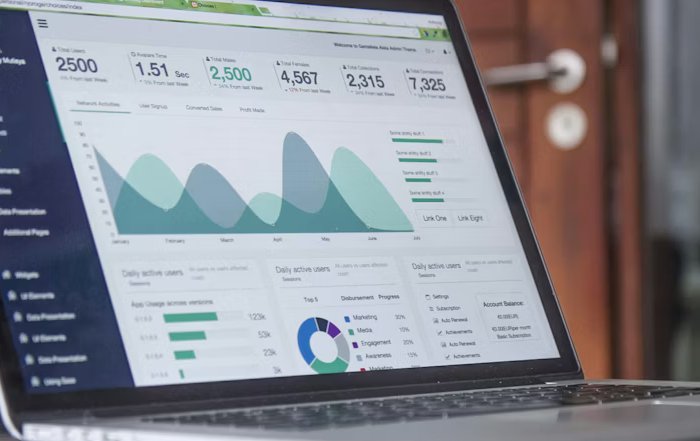
Executives who built their careers in an era of data scarcity now find themselves operating in an environment where the volume, velocity and variety of information can overwhelm even the most seasoned leadership teams. According to global analyses from organizations such as McKinsey & Company, Deloitte and Gartner, enterprises now collect data from connected devices, transactional systems, customer touchpoints, social platforms and supply chain networks, creating a universe of signals that can both illuminate and obscure underlying business reality. Leaders who once relied on periodic reports and historical financials must now interpret dashboards that update in real time, predictive analytics that forecast multiple scenarios and external indicators that can reshape assumptions overnight.
This shift has deep implications for how companies structure their decision processes. The traditional hierarchy of executive committees reviewing monthly or quarterly reports is being replaced by more dynamic, cross-functional decision forums in which finance, technology, operations, marketing and risk teams collaborate around shared data environments. As readers of TradeProfession.com who follow developments in business strategy and technology transformation recognize, the challenge is no longer simply aggregating information but ensuring that the right information reaches the right decision-makers at the right time, framed in a way that supports judgment rather than paralyzes it.
Artificial Intelligence as a Strategic Co-Pilot
Artificial intelligence has moved from the periphery of experimentation to the core of executive decision-making. In 2026, AI systems support forecasting in banking, risk scoring in insurance, pricing optimization in retail, predictive maintenance in manufacturing, fraud detection in crypto trading and algorithmic allocation in global investment portfolios. Organizations such as OpenAI, Google DeepMind, Microsoft, IBM and AWS have accelerated the development of enterprise-ready AI platforms, while regulatory bodies in the European Union, the United States and across Asia continue to refine frameworks for responsible deployment.
Executives increasingly rely on AI as a strategic co-pilot rather than a black box oracle. They expect transparent models, explainable outputs and robust monitoring of bias and drift. Leaders who follow AI developments through resources such as the OECD's work on AI policy and World Economic Forum guidance on responsible AI understand that algorithmic recommendations must be embedded within human-centered governance structures. For the TradeProfession.com community engaged with artificial intelligence in business, the most advanced organizations are designing decision architectures where AI augments, rather than replaces, executive judgment by surfacing patterns, testing scenarios and quantifying trade-offs, while leaving value-laden choices and accountability firmly with human leaders.
Decision-Making Across Banking, Crypto and Capital Markets
In banking and capital markets, the data-rich environment has redefined risk, liquidity and compliance decision-making. Global regulators such as the Bank for International Settlements and the Financial Stability Board have emphasized the importance of robust data governance and stress-testing frameworks, particularly as macroeconomic conditions remain volatile. Executives in major banks across North America, Europe and Asia rely on integrated risk dashboards that combine real-time market indicators, credit exposures, liquidity positions and macroeconomic forecasts. Those who follow the sector through banking insights and stock exchange developments on TradeProfession.com recognize that the competitive edge increasingly lies in the speed and reliability with which decision-makers can reallocate capital and adjust risk appetites in response to evolving signals.
The crypto and digital asset ecosystem adds another layer of complexity. Market participants track on-chain analytics, exchange order books, regulatory announcements and social sentiment in near real time. Executives at exchanges, custodians and fintech platforms must integrate traditional risk management with novel forms of market intelligence, while responding to evolving guidance from bodies such as the U.S. Securities and Exchange Commission, the European Securities and Markets Authority and the Monetary Authority of Singapore. Readers who follow crypto market developments understand that decision-making in this space requires a nuanced appreciation of technology risks, regulatory uncertainty and global liquidity dynamics, making disciplined data interpretation and scenario analysis essential to strategic resilience.
Economic Uncertainty and the Role of Macroeconomic Intelligence
The past several years have demonstrated that macroeconomic conditions can shift rapidly in response to geopolitical tensions, supply chain disruptions, commodity price volatility and policy changes across major economies. Executives in 2026 rely heavily on data and analysis from institutions such as the International Monetary Fund, the World Bank, the OECD and national central banks to inform strategic decisions on investment, pricing, hiring and capital structure. For those who engage with global economic perspectives and international business coverage on TradeProfession.com, it is clear that macroeconomic literacy has become a core component of executive competence.
Leaders must interpret not only headline indicators such as GDP growth, inflation and unemployment, but also higher-frequency data on consumer sentiment, purchasing managers' indices, freight volumes and energy demand. In Europe, North America and Asia, executives increasingly complement official statistics with alternative data sources such as satellite imagery, mobility data and digital transaction flows, while being mindful of privacy, ethics and representativeness. The ability to synthesize these diverse signals into coherent strategic narratives, and to adjust those narratives as conditions evolve, differentiates organizations that navigate uncertainty successfully from those that react too late or too rigidly.
Building Data Fluency in Executive Teams
A decisive factor in effective decision-making is the data fluency of executive teams themselves. In leading organizations across the United States, United Kingdom, Germany, Canada, Australia, Singapore and beyond, boards and C-suites are investing in their own upskilling, recognizing that data literacy can no longer be delegated solely to technical specialists. Institutions such as MIT Sloan School of Management, Stanford Graduate School of Business, INSEAD, London Business School and Wharton have expanded executive education programs focused on analytics, AI and digital strategy, while online platforms and corporate academies provide ongoing learning opportunities.
For the TradeProfession.com audience interested in education and executive development, the emerging best practice is to embed data literacy into leadership development pathways, performance reviews and succession planning. Executives are expected to probe assumptions in analytical models, challenge data quality, understand the limitations of predictive tools and ask informed questions about methodology and uncertainty. This does not mean every leader must code or build models, but they must be capable of engaging as sophisticated consumers of analytics, ensuring that strategic debates are grounded in both quantitative rigor and qualitative insight.
Governance, Ethics and Trust in Data-Driven Decisions
The credibility of executive decisions in a data-rich world depends fundamentally on governance, ethics and trust. High-profile incidents involving data breaches, algorithmic bias and misleading metrics have underscored the reputational and regulatory risks associated with careless use of data and AI. Regulatory frameworks such as the EU's AI Act, evolving privacy regimes in jurisdictions like the United States, Canada, Brazil and South Africa, and sector-specific guidelines from authorities in banking, healthcare and telecommunications all reinforce the need for robust oversight.
Executives must therefore ensure that their organizations have clear data governance structures, including defined ownership, standardized taxonomies, quality controls and audit trails. Ethical review boards, model risk management committees and cross-functional data councils are increasingly common in large enterprises across Europe, Asia and North America. Readers who follow sustainable and responsible business practices on TradeProfession.com will recognize that trustworthiness in data use is now intertwined with broader environmental, social and governance expectations. Leaders who can demonstrate transparency in how data informs decisions, and who provide stakeholders with meaningful explanations of AI-supported outcomes, are better positioned to maintain customer confidence, regulatory goodwill and employee engagement.
Human Judgment, Cognitive Bias and Behavioral Discipline
Despite the sophistication of data and AI tools, human judgment remains at the center of executive decision-making. Behavioral economics and cognitive psychology, advanced by researchers such as Daniel Kahneman, Richard Thaler and Cass Sunstein, have shown that even highly experienced leaders are vulnerable to biases such as overconfidence, confirmation bias, availability bias and loss aversion. In a data-rich context, these biases can be amplified rather than mitigated, as executives selectively interpret complex information to fit pre-existing narratives.
Leading organizations are therefore integrating behavioral discipline into their decision processes. This includes structured pre-mortems, red-team challenges, independent risk reviews and documented decision logs that separate facts, assumptions and judgments. Global consultancies and academic institutions have published practical frameworks that help executives design decision meetings to reduce groupthink and encourage constructive dissent. For readers of TradeProfession.com who track executive leadership practices, the critical insight is that data alone does not guarantee better outcomes; rather, it is the combination of robust data, thoughtful analytics and consciously designed decision rituals that produces more reliable and resilient choices.
Innovation, Founders and the Data Advantage
Founders and high-growth companies across technology hubs in Silicon Valley, London, Berlin, Toronto, Singapore, Seoul and Sydney are demonstrating how data-rich decision-making can accelerate innovation. Startups in sectors as diverse as fintech, healthtech, climate technology, logistics and education technology are building products and business models around data from the outset, leveraging cloud-native architectures, open-source tools and AI services to test hypotheses rapidly and iterate based on real-world feedback.
For entrepreneurs and investors who follow founder stories, innovation trends and investment insights on TradeProfession.com, the most successful ventures are those that institutionalize a culture of experimentation, where data from A/B tests, user analytics and operational metrics is used to make disciplined decisions about product features, pricing, go-to-market strategies and international expansion. However, even in these agile environments, founders must guard against the illusion of certainty that can arise from short-term metrics, ensuring that data-driven tactics remain aligned with long-term strategic vision and ethical responsibility.
Employment, Skills and Organizational Culture
The data-rich environment is reshaping employment patterns, job design and organizational culture worldwide. Roles such as data scientist, machine learning engineer, analytics translator and data product manager have become central to value creation in industries ranging from banking and manufacturing to retail and public services. At the same time, traditional roles in finance, operations, marketing and human resources increasingly require fluency in data interpretation and digital tools.
For professionals tracking employment trends and job opportunities on TradeProfession.com, it is evident that organizations across North America, Europe, Asia and Africa are redefining their talent strategies to attract and retain individuals who can bridge business context and technical capability. Executives play a crucial role in setting the tone: when senior leaders model data-informed decision-making, invest in analytics capabilities and reward collaborative problem-solving, they create cultures where employees at all levels are empowered to use data responsibly and creatively. Conversely, when leaders ignore or selectively use data, they inadvertently encourage fragmented, politically driven decision practices that undermine performance and trust.
Marketing, Customer Insight and Personalization at Scale
In marketing and customer engagement, data-rich decision-making has enabled unprecedented levels of personalization, segmentation and real-time optimization. Companies in the United States, Europe and Asia use advanced analytics to understand customer journeys, predict churn, optimize media spend and tailor offers across channels. Platforms from Adobe, Salesforce, SAP, HubSpot and other leading providers support complex decision engines that evaluate countless signals to determine the next best action for each customer interaction.
However, this sophistication brings heightened expectations from consumers and regulators around privacy, transparency and consent. Executives who oversee marketing, digital and customer functions must balance the pursuit of personalization with responsible data practices that respect regional regulations such as the EU's General Data Protection Regulation, the California Consumer Privacy Act and emerging frameworks in countries including Brazil, South Africa and Thailand. Readers who explore marketing and customer strategy on TradeProfession.com understand that sustainable competitive advantage in this domain depends not only on analytical capability but also on the trust customers place in how their data is used to shape decisions that affect their experiences.
Sustainable Business and Long-Term Value Creation
Sustainability has become a central lens through which executives evaluate strategic decisions, and data is at the heart of credible environmental, social and governance performance. Organizations across Europe, North America, Asia and other regions now collect detailed data on emissions, energy consumption, supply chain practices, workforce diversity and community impact, often aligning their reporting with standards from bodies such as the Global Reporting Initiative, the Sustainability Accounting Standards Board and the Task Force on Climate-related Financial Disclosures.
Executives who follow developments in sustainable business on TradeProfession.com and through resources like the United Nations Global Compact recognize that investors, regulators, employees and customers increasingly expect transparent, data-backed evidence of progress. Decision-making about capital allocation, product design, facility location and supply chain partnerships now routinely incorporates climate scenarios, carbon pricing assumptions and social impact metrics. Learn more about sustainable business practices through global initiatives and regional case studies that illustrate how data-driven sustainability strategies can mitigate risk, unlock innovation and strengthen brand equity across markets from Germany and Sweden to Japan, South Africa and Brazil.
Real-Time News, Signal Detection and Strategic Agility
In a world where geopolitical events, regulatory announcements, cyber incidents and social movements can reshape business conditions within hours, executives must develop robust mechanisms for real-time signal detection and interpretation. Global news organizations such as Reuters, Bloomberg, the Financial Times and the Wall Street Journal, as well as specialized industry outlets and regional media, provide essential context that complements internal data and analytics.
For the TradeProfession.com readership that relies on timely business news and analysis, the key challenge is no longer access to headlines but the ability to distinguish between noise and signal, to understand how external developments interact with internal vulnerabilities and opportunities, and to convene decision forums quickly enough to respond with clarity. Organizations that have established cross-functional "nerve centers" or "war rooms," integrating risk, communications, operations and finance, are better equipped to translate breaking news into coherent action plans, whether the issue is a regulatory change in the European Union, a cyberattack on a key supplier in Asia or a sudden shift in consumer sentiment in North America.
The TradeProfession.com Perspective: Integrating Domains for Better Decisions
What distinguishes the TradeProfession.com community is its broad yet interconnected focus across domains such as artificial intelligence, banking, business, crypto, the global economy, education, employment, executive leadership, founders, innovation, investment, jobs, marketing, sustainable development, the stock exchange and technology. This multidimensional perspective mirrors the reality of executive decision-making in 2026, where choices about technology adoption inevitably affect talent strategies, regulatory exposure, brand positioning, sustainability commitments and financial performance.
Executives who engage regularly with insights from business and management, technology and AI, global economic trends, innovation and investment and sustainability and responsibility are better positioned to make decisions that are not only data-informed but also contextually grounded and forward-looking. They recognize that the most significant strategic questions-whether to enter a new market, acquire a competitor, pivot a product line, restructure a workforce or commit to a net-zero pathway-cannot be answered by a single dataset or model. Instead, these decisions require integrating quantitative evidence with qualitative insight, stakeholder perspectives, ethical considerations and a clear sense of organizational purpose.
Trading Ahead: The Future of Executive Decision-Making
As the decade progresses, the data-rich environment will only intensify. Advances in quantum computing, edge AI, 5G and beyond, and the proliferation of connected devices will generate even more granular and real-time information across industries and regions. Regulatory frameworks will continue to evolve, with greater emphasis on algorithmic accountability, cross-border data flows and digital sovereignty. Talent markets will reward leaders who can navigate this complexity with confidence, humility and integrity.
For executives around the world, and for the global readership of TradeProfession.com, the imperative is clear: invest in the systems, skills and cultures that enable data to enhance, rather than overwhelm, human judgment. This means building trustworthy data foundations, embracing AI as a transparent and accountable co-pilot, cultivating behavioral discipline in decision forums, and remaining anchored in long-term value creation for shareholders, employees, customers and society.
In a data-rich world, the organizations that thrive will be those whose leaders treat information not as an end in itself but as a means to better questions, clearer priorities and more courageous, principled choices. The future of executive decision-making belongs to those who can combine analytical rigor with strategic imagination, technological sophistication with ethical responsibility, and global awareness with local sensitivity-turning the abundance of data into a durable advantage in an increasingly complex and interconnected world.
