
Innovation Hubs Driving the German Economy
Germany's economic narrative is increasingly defined by a network of innovation hubs that extend far beyond traditional industrial centers, weaving together advanced manufacturing, artificial intelligence, green technologies, financial innovation, and deep research capabilities into a coherent ecosystem that is reshaping how value is created and captured across the country and, by extension, across Europe and global markets. For the international business audience of TradeProfession.com, understanding how these hubs operate, how they interact with global capital and talent flows, and how they are redefining competitiveness in sectors from automotive to fintech is critical to making informed decisions about investment, partnerships, and strategic expansion.
From Industrial Powerhouse to Innovation Ecosystem
Germany has long been recognized as an export-oriented industrial powerhouse, built on the strength of its Mittelstand companies, engineering excellence, and a stable macroeconomic framework; yet in the decade leading up to 2026, the country has had to respond to accelerating technological disruption, demographic pressures, the global energy transition, and intensified competition from innovation-led economies such as the United States, China, South Korea, and Singapore. The strategic response has been a deliberate pivot from a predominantly manufacturing-based model toward a more distributed innovation ecosystem, anchored in regional hubs that combine research universities, corporate R&D centers, startups, venture capital, and supportive public policy.
This transformation has been reinforced by initiatives at both the federal and state levels, including programs under Germany's High-Tech Strategy, the digitalization agenda of the Federal Ministry for Economic Affairs and Climate Action, and EU-level frameworks such as Horizon Europe, all of which encourage cross-border collaboration, technology transfer, and commercialization of research. Businesses seeking to understand broader trends in innovation and competitiveness can explore the wider context of global business transformation through resources such as the business insights at TradeProfession and the analytical work of organizations like the OECD.
Berlin: Digital, AI, and Crypto as Engines of Growth
In 2026, Berlin continues to stand out as Germany's most visible innovation hub, with a startup scene that has matured from a low-cost experimental space into a globally competitive ecosystem attracting founders, engineers, and investors from across Europe, North America, and Asia. The city's strengths lie in software, artificial intelligence, fintech, crypto, and creative industries, supported by a blend of international capital, a large talent pool, and a culture that embraces experimentation and risk-taking more than many other German regions.
Berlin's AI ecosystem has benefited from strong academic institutions and research organizations including TU Berlin, Humboldt University, and the German Research Center for Artificial Intelligence (DFKI), which collaborate closely with startups and established corporates on machine learning, natural language processing, and robotics. International executives looking to understand AI's role in reshaping business models can deepen their perspective through dedicated coverage of artificial intelligence and automation trends as well as analytical work from organizations such as McKinsey & Company that examine AI's economic impact.
Berlin has also become a focal point for the European crypto and Web3 movement, with startups building decentralized finance platforms, digital asset custody solutions, and tokenization infrastructure, often in dialogue with regulators and financial institutions in Frankfurt and Brussels. To understand the broader implications of digital assets for banking and capital markets, business leaders can explore crypto and digital asset perspectives alongside regulatory guidance from bodies such as the European Central Bank and the Bank for International Settlements.
Munich: Deep Tech, Mobility, and Industrial AI
Munich has emerged as Germany's preeminent deep-tech hub, rooted in its long-standing role as a center for automotive, aerospace, and industrial engineering, and now increasingly recognized for its strengths in robotics, sensor technology, quantum computing, and industrial AI. Large corporates such as BMW, Siemens, and Infineon Technologies maintain extensive R&D operations in and around the city, collaborating with the Technical University of Munich (TUM) and the Max Planck Society to translate fundamental research into scalable commercial applications.
The region's innovation model is characterized by tight integration between corporate labs, university research, and venture-backed startups that specialize in areas such as autonomous driving, semiconductor design, and industrial Internet of Things platforms. These capabilities are particularly relevant as global supply chains are reconfigured and as manufacturers in Europe, North America, and Asia invest heavily in smart factories and resilient production networks. To place Munich's deep-tech strengths in a global context, decision-makers can consult research from the World Economic Forum on the Fourth Industrial Revolution and explore broader technology trends through technology-focused coverage on TradeProfession.
Munich's role in mobility innovation is also central to Germany's response to the rapid electrification of transport and the rise of software-defined vehicles. Partnerships between original equipment manufacturers, Tier 1 suppliers, and software startups are driving new business models in fleet management, charging infrastructure, and data-driven mobility services, which in turn are influencing investment decisions in markets from the United States and the United Kingdom to China and South Korea.
Frankfurt and the Financial Innovation Corridor
Frankfurt remains Germany's financial capital and a core node in European and global banking, hosting the European Central Bank, major German and international banks, and a growing number of fintech and regtech startups that are reshaping payment systems, lending models, and capital markets infrastructure. The city's innovation trajectory is closely tied to the modernization of financial services, the rollout of digital euro experiments, and the need to balance regulatory stability with technological agility.
The emergence of a "financial innovation corridor" linking Frankfurt with hubs such as Berlin, Munich, and international centers like London and Zurich is particularly evident in 2026, as cross-border collaborations focus on digital identity, open banking, and sustainable finance. Executives monitoring these developments can benefit from sector-specific analysis available in the banking and financial services section of TradeProfession and from global standards and policy recommendations issued by institutions such as the International Monetary Fund and the Financial Stability Board.
Frankfurt's role extends beyond traditional finance into areas such as green bonds, ESG-linked loans, and climate-related risk management, reflecting the growing importance of sustainable capital allocation in Europe and worldwide. As investors from North America, Asia, and the Middle East seek credible sustainable assets, Frankfurt's financial institutions and fintech companies are increasingly positioning themselves as partners of choice for structured products that align with the EU Taxonomy for Sustainable Activities and global climate commitments.
Hamburg and Bremen: Logistics, Maritime Tech, and Green Hydrogen
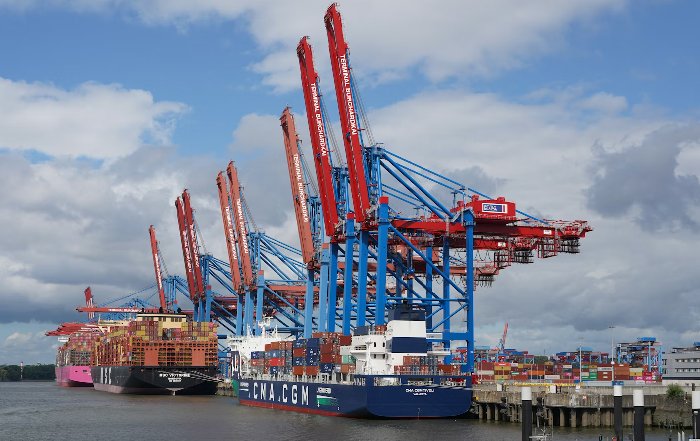
Northern Germany, led by cities such as Hamburg and Bremen, has become a critical innovation hub for logistics, maritime technology, and renewable energy, particularly green hydrogen. Hamburg, with one of Europe's largest ports, is at the forefront of digitalizing logistics chains, deploying smart port technologies, and integrating autonomous systems into cargo handling and shipping operations. This transformation is essential to maintaining Germany's competitiveness in global trade, especially in the context of shifting trade patterns and increased scrutiny on supply chain resilience.
The region has also positioned itself as a leader in the hydrogen economy, with large-scale projects involving Airbus, Shell, and regional utilities aiming to decarbonize aviation, shipping, and heavy industry through green hydrogen production and infrastructure. These projects are often developed in partnership with European and international initiatives coordinated by organizations such as the International Energy Agency and the Hydrogen Council, which provide frameworks for investment and policy alignment. Businesses tracking the intersection of logistics, energy, and sustainability can complement this global perspective with focused coverage on sustainable business practices and green innovation.
Stuttgart, Wolfsburg, and the Automotive Transformation
The automotive clusters around Stuttgart and Wolfsburg remain vital to Germany's industrial base, yet the innovation agenda in 2026 is characterized by profound structural change as global automakers and suppliers pivot toward electrification, software, and connected mobility services. Major players such as Mercedes-Benz Group, Porsche, and Volkswagen Group are reconfiguring their R&D portfolios, investing heavily in battery technology, power electronics, and in-vehicle software platforms, while collaborating with startups on over-the-air updates, data analytics, and user experience design.
These regions illustrate Germany's broader challenge: to manage the transition from internal combustion engine dominance to a mobility ecosystem in which value is increasingly captured through software, platforms, and services rather than hardware alone. This transition has significant implications for employment, supply chains, and regional development, not only in Germany but also in supplier countries such as Italy, Spain, the Czech Republic, and across Asia. Readers interested in the labor market and skills dimension of this transformation can draw on resources that examine employment and jobs trends and on global labor market analyses from organizations such as the International Labour Organization.
Research Institutes as the Backbone of Innovation
While Germany's innovation hubs are often associated with specific cities or industries, their underlying strength is deeply rooted in a dense network of research institutions, including the Fraunhofer-Gesellschaft, the Max Planck Society, the Helmholtz Association, and the Leibniz Association, which together provide world-class capabilities in applied and fundamental research. These organizations act as bridges between universities, corporates, and startups, enabling technology transfer in fields ranging from advanced materials and photonics to AI, quantum technologies, and climate science.
The Fraunhofer institutes, in particular, play a critical role in translating research into industrial applications, operating at the interface between science and business and helping companies, including many Mittelstand firms, adopt new technologies without having to build extensive in-house research capabilities. International observers can gain a deeper understanding of Germany's research infrastructure by exploring the Fraunhofer-Gesellschaft and Max Planck Society websites, which detail their strategic priorities and global partnerships. Complementary perspectives on how research and innovation drive economic performance can also be found in global analyses of innovation and competitiveness.
Startups, Founders, and the New Entrepreneurial Culture
One of the most significant shifts in the German innovation landscape over the past decade has been the emergence of a more vibrant entrepreneurial culture, with founders increasingly willing to scale globally, attract international capital, and pursue ambitious exits through IPOs or strategic acquisitions. While the ecosystem still does not match the scale or risk appetite of Silicon Valley or Shenzhen, the presence of successful exits in software, e-commerce, biotech, and fintech has created a new generation of experienced founders and operators who reinvest capital and expertise into the next wave of startups.
Organizations such as German Startups Association and initiatives like the Digital Hub Initiative have supported this development by connecting regional hubs, facilitating access to venture capital, and promoting Germany as a startup destination to international founders and investors. Those seeking to understand the founder journey and leadership challenges in this environment can explore focused perspectives on founders and executive leadership and draw on global entrepreneurship research from institutions such as the Global Entrepreneurship Monitor.
Germany's startup scene is also becoming more international, with growing participation from founders originating in countries such as the United States, the United Kingdom, India, Israel, and across Europe and Asia, attracted by Germany's market size, central location within the EU, and strong industrial base that offers rich opportunities for B2B innovation.
Talent, Education, and the Skills Imperative
The success of Germany's innovation hubs depends heavily on the availability of highly skilled talent, both domestic and international, in disciplines such as software engineering, data science, robotics, materials science, and climate technology. While Germany benefits from strong universities and applied sciences institutions, it faces demographic challenges and increasing global competition for talent, particularly from fast-growing innovation centers in North America and Asia.
In response, policymakers and businesses are investing in modernizing education and training systems, expanding English-language programs in STEM fields, and streamlining immigration pathways for qualified professionals. The dual vocational training system, long a cornerstone of German industrial competitiveness, is being updated to incorporate digital skills and lifelong learning, ensuring that workers can adapt to new technologies throughout their careers. Readers interested in the intersection of education, skills, and innovation can explore education-focused analysis on TradeProfession and international benchmarking data from organizations such as the World Bank and UNESCO.
At the same time, companies across Germany's innovation hubs are experimenting with hybrid work models, international remote teams, and distributed R&D networks, which allow them to tap into talent pools in countries such as Canada, Australia, India, and Brazil while maintaining core decision-making and IP ownership within Germany.
Capital, Investment, and the Role of Public Policy
Financing remains a decisive factor in the evolution of Germany's innovation hubs, with venture capital, growth equity, and corporate venture arms all playing complementary roles in funding startups and scale-ups. Compared with the United States, Germany's venture ecosystem is smaller, yet it has grown significantly in both volume and sophistication, particularly in sectors such as enterprise software, climate tech, and deep tech. Public initiatives, including the Future Fund and various state-level investment vehicles, have been designed to close financing gaps, especially in later-stage growth funding.
For investors and corporate strategists evaluating opportunities in Germany, it is important to understand the interplay between private capital, public funding, and EU-level programs, as well as the regulatory and tax environment that shapes investment decisions. Detailed perspectives on capital markets and corporate finance can be complemented by resources such as investment-focused analysis on TradeProfession and market data provided by the Deutsche Börse Group. At the global level, organizations like the OECD and World Bank offer comparative insights into how financial systems support innovation and growth.
Public policy also plays a central role in shaping Germany's innovation trajectory, from digital infrastructure investments and data protection regulations to incentives for renewable energy and industrial decarbonization. Businesses operating across borders must navigate not only German regulations but also EU-wide frameworks such as the Digital Services Act, the AI Act, and the Green Deal, all of which influence how digital and green technologies are developed and deployed.
Global Integration and Geopolitical Context
Germany's innovation hubs do not operate in isolation; they are deeply embedded in global value chains and research networks that span Europe, North America, and Asia. The country's role as Europe's largest economy and a leading export nation means that its innovation performance has implications for the broader European and global economy, influencing trade flows, technology standards, and investment decisions from London and New York to Singapore and Tokyo.
Geopolitical developments, including shifting trade relationships, industrial policy in the United States and China, and debates over technology sovereignty within the European Union, all shape the strategic environment in which German companies and research institutions operate. Executives seeking to place Germany's innovation hubs within this wider context can refer to global economic coverage such as the economy-focused analysis on TradeProfession and to macroeconomic assessments from organizations like the International Monetary Fund and the World Trade Organization.
As supply chains are reconfigured to balance efficiency with resilience, Germany's strengths in advanced manufacturing, engineering, and industrial software position its innovation hubs as key partners for companies in regions such as North America, East Asia, and the Middle East that are seeking reliable technology and manufacturing collaborations.
The Part of TradeProfession in Navigating Germany's Innovation Landscape
For executives, investors, and professionals monitoring developments across artificial intelligence, banking, business strategy, crypto, education, employment, and technology, TradeProfession.com serves as a specialized resource that connects the dynamics of Germany's innovation hubs with broader global trends. By combining coverage of business and corporate strategy, global markets and news, stock exchange developments, and jobs and career transitions, the platform provides a coherent view of how innovation translates into economic performance, market opportunities, and talent needs.
As Germany's innovation hubs in Berlin, Munich, Frankfurt, Hamburg, Stuttgart, and other regions continue to evolve, the ability to interpret signals from these ecosystems and integrate them into global business strategies will be a differentiator for organizations seeking sustainable growth. Whether the focus is on AI-driven transformation, fintech and digital assets, industrial decarbonization, or the future of work, the German experience offers valuable lessons on how to combine research excellence, industrial capabilities, and entrepreneurial energy into an innovation model that is both globally competitive and aligned with long-term societal goals.
By following the developments reported and analyzed on TradeProfession.com, business leaders across the United States, the United Kingdom, Germany, Canada, Australia, and beyond can better understand how Germany's innovation hubs are reshaping not only the national economy but also the wider architecture of global trade, investment, and technology in the second half of the 2020s.
